| Bacillus cereus | |
|---|---|
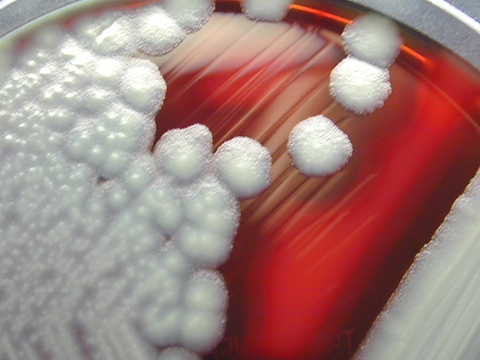 | |
| B. cereus colonies on a sheep-blood agar |
Bacillus Cereus is my foodborne disease subject in this post,
I am going to talk about Bacillus Cereus Souces and symptoms.
Bacillus Cereus outbreaks of food poisoning
before 1970s, Bacillus Cereus was not thought to be a cause of outbreaks of food poisoning in the United States,
although it had been recognized as causing foodborne disease in Europe about 20 years earlier.
Public health officials in this country simply regarded it as an essentially nonpathogenic aerobic spore-former.
Even its characteristics of being fairly heat resistant and widely distributed in a variety of foods, soil, air, and water did not raise any alarm.
However, two types of food poisoning result from the different strains of this organism.
One type produces a heat-labile toxin, the other a heat-stable one.
Both the symptoms and the incriminated foods vary for the different strains.
Bacillus Cereus Sources
Food products implicated in this type of illness have included :
- Cereal dishes containing corn and cornstarch.
- Potatoes.
- Cold soups.
- Sauces.
- Puddings.
- Meats.
- Cooked vegetables.
- Ice cream.
- Fresh and powdered milk.
In 1973 a food poisoning incident was associated with vegetable sprouts.
Tests of seed sprouting kits have since shown that 56 of 98 units tested positive for Bacillus Cereus contamination .
Although washing with warm water three times for 10 minutes decreased the population of the organism in mung bean sprouts,
it did not reduce the numbers of organisms in wheat sprouts to safe levels.
Substantial numbers in wheat sprouts even survived three washes and 20 minutes of cooking .
The FDA issued seizure orders on such sprouting kits.
Bacillus Cereus Symptoms
The symptoms produced by the heat-labile toxin or the organism producing it occur after 8-16 hours and are similar to those caused by Clostridium perfringens.
Symptoms are primarily :
- Diarrhea with abdominal pain.
- Fever occurring occasionally .
Symptoms usually subside in 24 hours.
The heat-stable toxin is found in fried rice.
IN oriental restaurants,
large batches of rice are frequently left to cool at room temperature.
Refrigeration is said to make the rice sticky,
yielding a less desirable fried rice product,
so rice is cooled at room temperature.
This cooling period creates ideal conditions for the organism to grow and proliferate toxin.
Pasta products have also been implicated as sources .
The heat-stable toxin produces a severe emetic (vomiting) reaction accompanied by gastric pain, with onset 1-6 hours after ingestion of the food.
Bacillus Cereus Illness usually lasts 6-24 hours.
مع تحيات وصفه وخلطة أعشاب
إقرإي أيضا مواضيع أخرى عن مسكات سهلة لجمالك

Put the internet to work for you.


ليست هناك تعليقات: